Eleven partners from Spain, Portugal, France, and Ireland will work together to develop digital tools that enhance transparency, sustainability, and environmental traceability in the Atlantic fisheries sector.
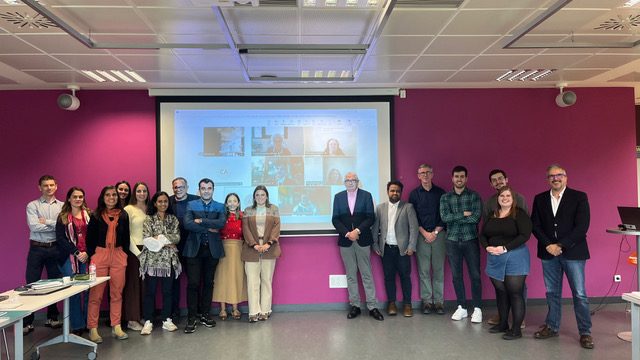
The University of Cantabria (UC) hosted on November 4th the kick-off meeting of the European project SMART4SEA – Boosting the environmental traceability of the Atlantic seafood sector: sea to fork transparency and consumer engagement, co-funded by the Interreg Atlantic Area 2021–2027 Programme through the European Regional Development Fund (ERDF).
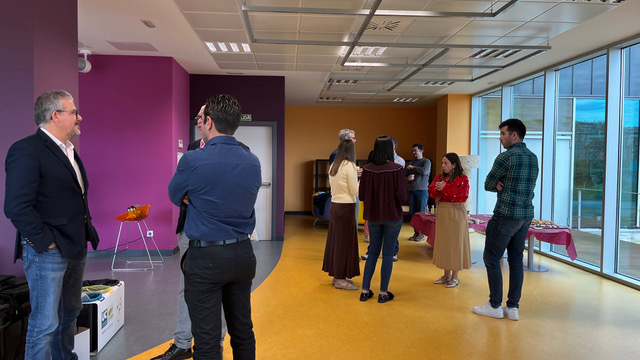
The meeting, held at the Tres Torres Building on the UC campus, brought together representatives from partner entities across Spain, Portugal, France, and Ireland, who will collaborate over the next three years to develop an innovative digital and environmental infrastructure aimed at improving traceability, sustainability, and resource efficiency within the Atlantic fisheries sector.
The session was opened by María Margallo, Vice-Rector for Sustainability and Campus Spaces at the University of Cantabria, Professor in the Department of Chemical and Biomolecular Engineering, and project coordinator. Margallo highlighted “the relevance of SMART4SEA in advancing towards a more sustainable, connected, and transparent fisheries sector,” emphasizing that “technological innovation must go hand in hand with environmental sustainability.”
Ignacio Varela, Director of the Research Area of the Vice-Rectorate for Research, Transfer and Doctoral Studies, also took part in the event, stressing UC’s commitment to leading international projects that foster scientific cooperation in the fields of marine research and the blue economy.
SMART4SEA, coordinated by the DePRO Research Group (Process and Product Development) of the Department of Chemical and Biomolecular Engineering at the University of Cantabria, applies Life Cycle Assessment (LCA) methodology to quantify and reduce the environmental impacts of the fisheries sector.
The project will assess the environmental footprint of seafood products and their traceability along the entire value chain—from fishing operations to consumption—paying particular attention to waste generation, losses, and plastics at each stage.
Moreover, the integration of digital technologies such as blockchain, Internet of Things (IoT), and real-time data analytics will enable secure and intelligent traceability “from sea to fork,” providing consumers with verified environmental information.
Objectives and expected results
- The creation of a digital and blockchain platform to record and validate operational and environmental data from fishing fleets and seafood companies.
- The development of smart labels that inform consumers about the product’s environmental impact and traceability.
- The creation of dynamic databases and LCA models for the fisheries sector, including indicators such as carbon, water, and plastic footprints.
- The design of communication and awareness strategies targeting consumers, businesses, and public administrations to promote more sustainable and responsible practices.
A transnational consortium for a more sustainable ocean
SMART4SEA is coordinated by the University of Cantabria (Spain) and involves the participation of:
- Spain: ANFACO-CYTMA, ARVI (Cooperative of Fishing Vessel Owners of the Port of Vigo).
- Portugal: Bitcliq, Instituto Português do Mar e da Atmosfera (IPMA), Universidade de Aveiro, and Universidade do Porto.
- France: Valorial.
- Ireland: University College Dublin (UCD) and University of Galway (UG).
The project will run from 2025 to 2028, with a total budget of €2,351,688.43, of which €1,763,766.32 is funded by the European Regional Development Fund (ERDF).
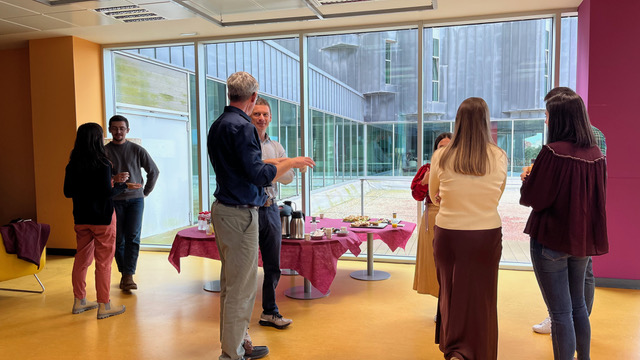
During the kick-off meeting, partners presented their Work Packages and agreed on the next steps for project implementation.
About SMART4SEA
SMART4SEA represents a unique opportunity to strengthen Atlantic cooperation and advance towards a smarter, more transparent, and environmentally responsible fisheries sector—one in which technological innovation and sustainability go hand in hand to ensure the future of the oceans and the well-being of Atlantic coastal communities.