Marine plastic pollution is a major environmental and socioeconomic issue, accounting for up to 85% of all marine litter. This pollution comes from both land- and ocean-based sources, with 10–20% made up of abandoned, lost, or discarded fishing gear (ALDFG), often referred to as “ghost gear.” The remaining 80% originates from land sources.
Smart4Sea aims to identify and reduce Plastic pollution generated across the Atlantic Seafood sector.
At the University of Galway, we are contributing to this effort by developing a report that identifies the sources, pathways, and current mitigation initiatives for marine plastic pollution, that is linked to the Atlantic seafood industry. From ghost gear to packaging waste, our work will help inform practical mitigation strategies and policy recommendations. This will support a more sustainable seafood system and cleaner, healthier oceans.
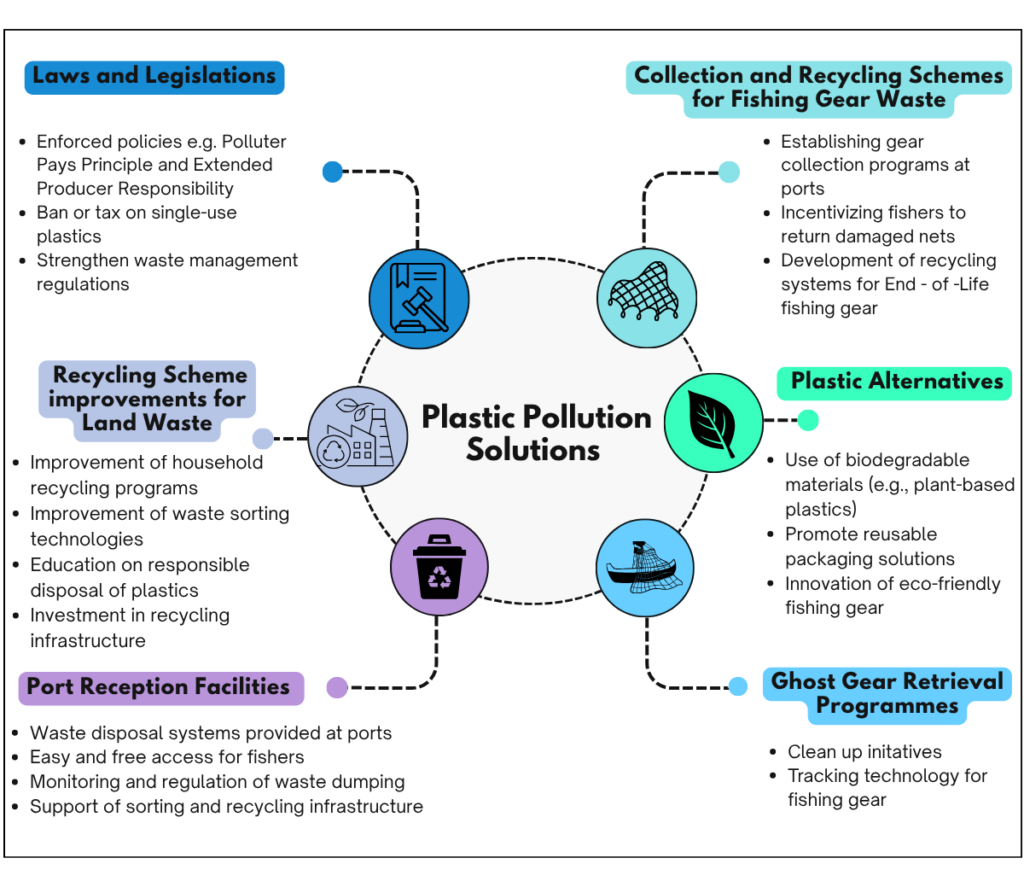
Current solutions in the spotlight inlude:
For Abandoned, lost or discarded fishing gear (ALDFG)
- Collection and recycling schemes of waste fishing gear
- Ghost gear retrieval programmes
- Port reception facilities so waste from fishing vessels can be disposed of responsibly
Land based improvements to prevent plastic reaching the seas:
- Improvements in the recycling schemes for land waste
- The introduction of producer responsibility laws and regulations on single use plastics
- Sustainable alternatives to using plastics e.g plant-based materials
- What can be done next ?