Methodology
SMART4SEA applies a structured, research-driven and multi-actor methodology organised around four Work Packages that together address the environmental, social and technological challenges of the Atlantic seafood sector. These WPs guide the project from data collection and scientific assessment to consumer engagement and real-world impact.
- WP1
Environmental traceability of fish and seafood products
This WP develops the foundations of SMART4SEA’s environmental traceability system. It focuses on:
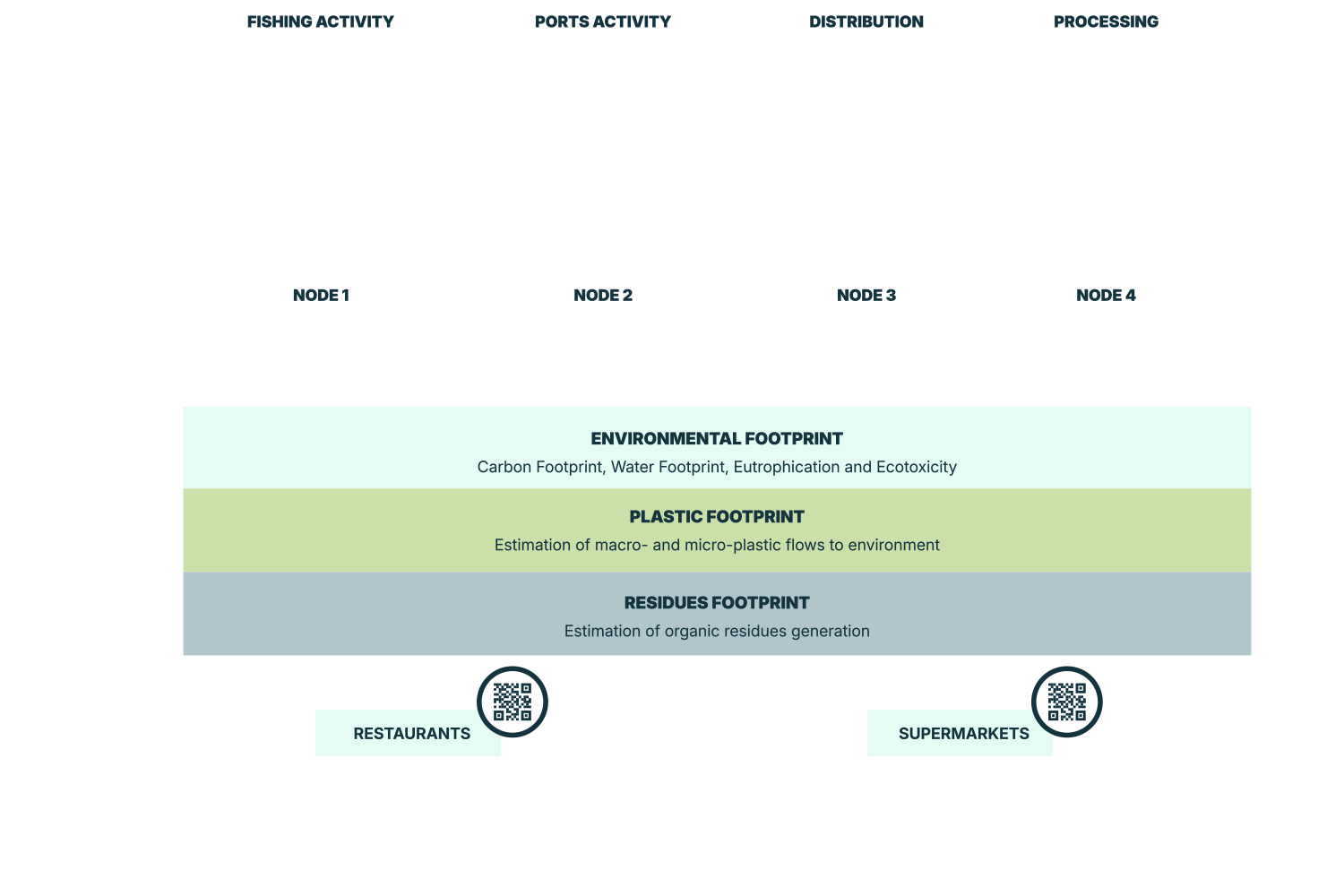
- Collecting operational, environmental and fisheries data using digital tools.
- Standardising data protocols across vessels, ports and processing plants.
- Integrating environmental information through Life Cycle Assessment (LCA).
- Creating a dynamic and harmonised database to support transparent, comparable and reliable environmental indicators.
WP1 builds the scientific and technical backbone of SMART4SEA.
- WP2
Consumer perception of environmental traceability tools through pilot cases
This WP evaluates how consumers understand, trust and use environmental information related to seafood. Key actions include:
- Testing smart environmental labels (QR/NFC) in real market conditions.
- Assessing consumer preferences, expectations and willingness to engage with traceability data.
- Collecting feedback from citizens across the Atlantic Area through surveys, workshops and pilot demonstrations.
- Using insights to improve the design, clarity and accessibility of traceability tools.
WP2 ensures that the solutions developed are meaningful, user-friendly and effective for the public.
- WP3
Main challenges of the Atlantic seafood sector
This WP addresses the key environmental and social challenges affecting the Atlantic seafood value chain. It focuses on three interconnected areas:
- Food loss and waste: analysing how waste is generated across fishing, processing and distribution, and developing Blue Circular Strategies to reduce losses, valorise by-products and minimise macroplastic waste.
- Plastic and microplastic pollution: assessing sources of marine litter, analysing microplastic contamination in key seafood species, evaluating the effect of cooking methods, and generating datasets on the fate and transport of microplastics in marine environments.
- Social sustainability of fisheries: examining generational renewal, labour conditions, workforce attractiveness and changing seafood consumption patterns, and providing strategic recommendations to strengthen social resilience in the sector.
- WP4
From research to plate: connecting science with sustainable seafood
This WP translates scientific results into practical tools, guidelines and communication outputs that support both industry and society. It focuses on:
- Packaging project findings for companies, policymakers and citizens.
- Developing communication materials, training content and outreach activities.
- Strengthening cooperation among research, industry, public authorities and consumers.
- Promoting adoption of sustainable practices through awareness, education and engagement.
- WP1
Environmental traceability of fish and seafood products
This WP develops the foundations of SMART4SEA’s environmental traceability system. It focuses on:
- Collecting operational, environmental and fisheries data using digital tools.
- Standardising data protocols across vessels, ports and processing plants.
- Integrating environmental information through Life Cycle Assessment (LCA).
- Creating a dynamic and harmonised database to support transparent, comparable and reliable environmental indicators.
WP1 builds the scientific and technical backbone of SMART4SEA.
- WP2
Consumer perception of environmental traceability tools through pilot cases
This WP evaluates how consumers understand, trust and use environmental information related to seafood. Key actions include:
- Testing smart environmental labels (QR/NFC) in real market conditions.
- Assessing consumer preferences, expectations and willingness to engage with traceability data.
- Collecting feedback from citizens across the Atlantic Area through surveys, workshops and pilot demonstrations.
- Using insights to improve the design, clarity and accessibility of traceability tools.
WP2 ensures that the solutions developed are meaningful, user-friendly and effective for the public.
- WP3
Main challenges of the Atlantic seafood sector
This WP addresses the key environmental and social challenges affecting the Atlantic seafood value chain. It focuses on three interconnected areas:
- Food loss and waste: analysing how waste is generated across fishing, processing and distribution, and developing Blue Circular Strategies to reduce losses, valorise by-products and minimise macroplastic waste.
- Plastic and microplastic pollution: assessing sources of marine litter, analysing microplastic contamination in key seafood species, evaluating the effect of cooking methods, and generating datasets on the fate and transport of microplastics in marine environments.
- Social sustainability of fisheries: examining generational renewal, labour conditions, workforce attractiveness and changing seafood consumption patterns, and providing strategic recommendations to strengthen social resilience in the sector.
- WP4
From research to plate: connecting science with sustainable seafood
This WP translates scientific results into practical tools, guidelines and communication outputs that support both industry and society. It focuses on:
- Packaging project findings for companies, policymakers and citizens.
- Developing communication materials, training content and outreach activities.
- Strengthening cooperation among research, industry, public authorities and consumers.
- Promoting adoption of sustainable practices through awareness, education and engagement.